Enquiry
Large Infrastructure Contractor in Maharashtra
Large infrastructure is easy to recognize once it is finished.
An expressway stretches across districts. A highway connects cities. A railway corridor carries people and goods. An airport becomes a new gateway for an entire region.
What is harder to see is everything that happened before these projects reached that stage.
Behind large infrastructure are thousands of daily decisions involving people, machinery, material, ground conditions, logistics and construction sequences. The bigger the project becomes, the more important it is to keep all of these elements working together.
At Godavari Constructions, our understanding of this environment has developed over decades of civil contracting.
Our journey in the industry goes back to 1978, when our promoter, Shri Dilip Marutirao Tidke, began civil contracting. Godavari Constructions was established in 1989, and since then we have built experience across roads, expressways, railway-related works, irrigation and other infrastructure assignments.
That experience shapes how we approach our work as a large infrastructure contractor in Maharashtra.
Large Projects Are Really Thousands of Smaller Operations
A major infrastructure project may appear as one project on paper.
On the ground, it is hundreds or even thousands of individual activities.
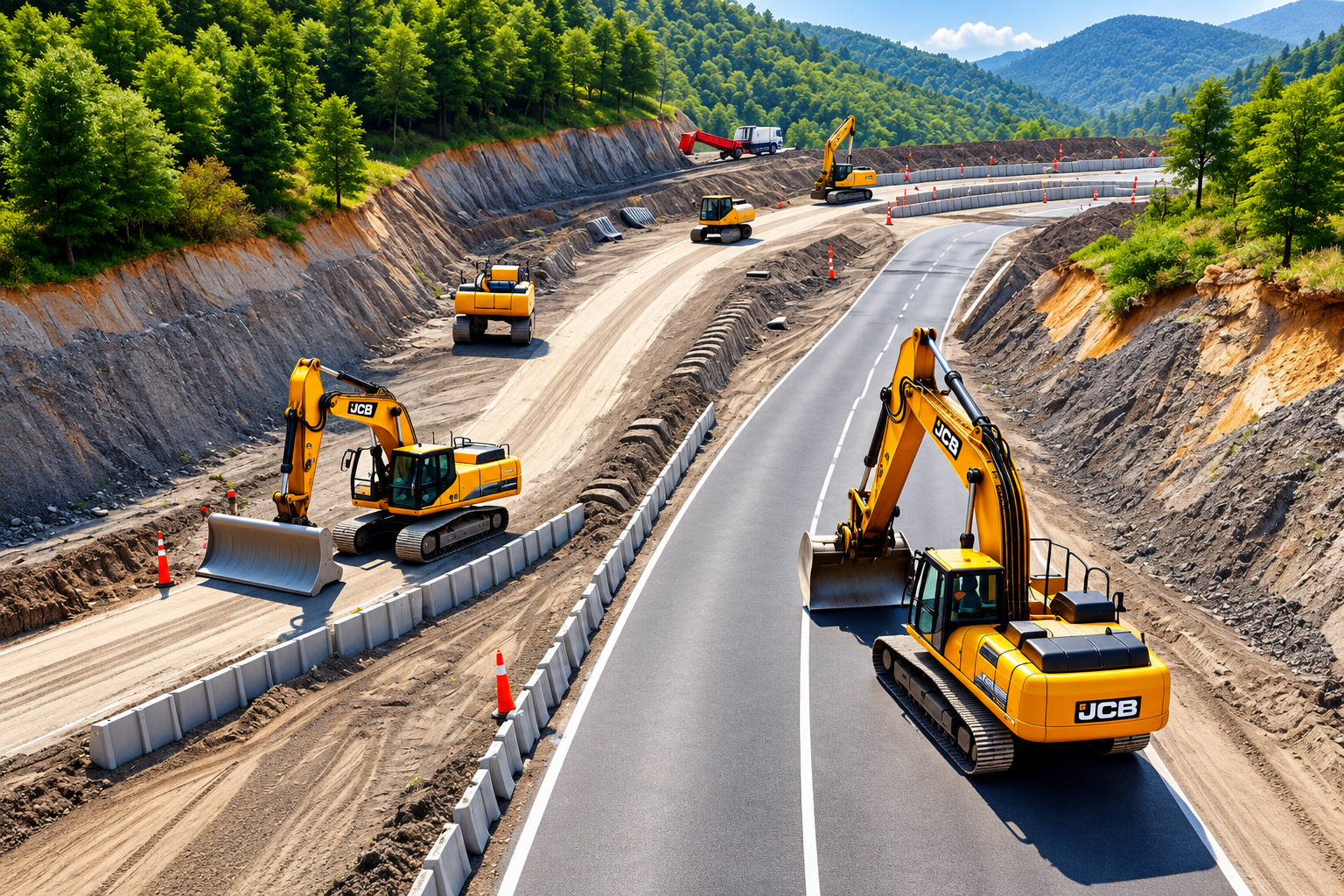
One area may be undergoing excavation while material is being transported from another. Embankment work could be progressing further along the alignment. Grading and compaction may be taking place elsewhere.
Each activity has its own requirement, but none exists completely independently.
This is what makes large infrastructure construction challenging.
The objective is not simply to complete one activity quickly. It is to keep different operations progressing in a way that supports the overall project.
Experience Across Major Infrastructure Environments
Our capabilities have grown through exposure to different types of infrastructure work.
Godavari Constructions' documented portfolio includes work associated with the Mumbai–Nagpur Expressway, including a section from Km 498.000 to Km 501.400.
We have also undertaken work associated with NH-166 Ratnagiri–Kolhapur, involving earthwork, excavation, embankment and sub-grade activities.
Our experience extends beyond highways.
We have undertaken railway formation work and material loading and transportation related to Navi Mumbai International Airport, along with irrigation-related projects and other civil works.
Each environment has taught us something different.
A highway teaches you about working across long alignments. Large earthwork teaches you about machinery and material movement. Railway formation brings its own construction requirements. Airport-related work can involve substantial logistics and coordination.
Together, these experiences have shaped the contractor we are today.
Scale Changes the Way Construction Has to Be Managed
As a project grows, small operational decisions begin to have larger consequences.
Imagine an excavation operation where several machines and tippers are working continuously.
If loading takes longer than planned, transportation slows down. If transportation slows, excavators may wait. If material reaches the receiving area faster than it can be handled, congestion develops.
None of these issues may seem significant in isolation.
Repeated throughout a large project, however, they can affect productivity.
This is why large infrastructure construction requires more than individual technical capabilities. It requires an understanding of how the entire site operates as a system.
Machinery Is Important. Deployment Is More Important.
Heavy infrastructure needs heavy equipment.
Our machinery resources include Poclain excavators, Tata Hyva tippers, graders, vibratory rollers, water tankers and tractor loaders, together with supporting vehicles and equipment.
But we have learned over the years that owning machinery and using machinery effectively are two different things.
The right equipment needs to reach the right working area at the right stage of construction.
An excavator waiting for transportation is not productive. A grader arriving before the formation is ready cannot perform its intended role efficiently.
For us, equipment deployment is therefore closely connected to planning and site coordination.
Infrastructure Is Still Built by People
Large machines may dominate the view of an infrastructure site, but construction remains a people-driven activity.
Our workforce includes project managers, site engineers, supervisors, equipment operators, drivers, helpers and supporting personnel.
Their work connects every stage of execution.
Engineers understand project requirements. Supervisors translate those requirements into daily site activities. Operators handle machinery in real working conditions. Drivers maintain the movement of materials, while project managers coordinate the larger operation.
The effectiveness of a construction team depends on how well these different responsibilities come together.
Working Across Maharashtra Means Learning to Adapt
Maharashtra does not offer one standard construction environment.
A project around Navi Mumbai can present very different working conditions from a site in Raigad, Ratnagiri or Kolhapur.
Terrain changes. Site access changes. Material movement requirements change. Weather and local conditions can influence daily operations.
Our experience across different parts of Maharashtra has taught us not to assume that what worked on one project will automatically work on another.
Good execution begins with understanding the actual site.
That may sound simple, but on large infrastructure projects it can influence everything from machinery deployment to transportation planning.
The Groundwork Behind Major Connectivity
A large part of our experience lies in the work that happens before the finished infrastructure becomes visible.
Earthwork, excavation, embankment development, sub-grade preparation, railway formation and bulk material movement can all form part of this early construction stage.
Consider a highway.
Before the finished road can carry traffic, the route has to reach the required formation. Existing ground may need cutting. Low areas may require filling and embankment development. Material needs to be moved, spread and compacted.
The same principle applies across many infrastructure sectors: later stages depend on the quality and progress of the work completed earlier.
For us, groundwork is not secondary work.
It is where infrastructure starts becoming real.
Decades of Construction Create Practical Knowledge
There are things about construction that can be understood from drawings and specifications.
There are other things that become clearer only after years on project sites.
You learn how quickly conditions can change. You understand why equipment coordination matters. You recognize how one delayed operation can influence several others.
Our civil contracting roots go back to 1978, with Godavari Constructions established in 1989.
That history represents more than time in business.
For us, it represents decades of accumulated practical knowledge from working with machinery, people, materials and different construction environments.
What Should You Look for in a Large Infrastructure Contractor?
Selecting a large infrastructure contractor in Maharashtra should involve looking at practical capability rather than scale alone.
Relevant project exposure matters. Machinery resources matter. Experienced manpower matters. The ability to manage earthwork, material transportation and different civil operations matters.
Most importantly, these resources need to function together.
A large project does not benefit from having equipment available if it cannot be coordinated effectively. In the same way, experience becomes valuable when it helps teams respond to the actual requirements of the site.
At Godavari Constructions, our experience across expressways, highways, railway formation, airport-related material movement, irrigation and other civil infrastructure assignments has helped us build this practical understanding over time.
Building Infrastructure at Scale
Maharashtra's infrastructure continues to evolve through transportation networks, industrial development and major connectivity projects.
The scale of construction may continue to grow, but the fundamentals remain familiar to us.
Understand the project.
Understand the ground.
Bring together the right people and machinery.
Keep the work moving.
For projects requiring large-scale earthwork, excavation, embankment construction, sub-grade preparation, road and highway civil works, railway formation, bulk material movement or other infrastructure-related civil activities, Godavari Constructions brings decades of practical contracting experience to the site.
Because large infrastructure is not built by scale alone.
Service
|
16 Oct 2026