Enquiry
Earthwork and Excavation Contractor in Maharashtra
Long before a highway carries its first vehicle, an industrial site becomes operational or a major infrastructure project takes its final shape, somebody has to deal with the ground.
It may need to be excavated, cut, filled, levelled or prepared. Thousands of tonnes of material may have to move from one location to another. Excavators, tippers, graders and rollers may spend months working before the most visible stages of construction even begin.
This is the world of earthwork and excavation.
At Godavari Constructions, it is a world we know through decades of practical civil contracting experience. Our roots in the industry go back to 1978, and Godavari Constructions was established in 1989.
Over the years, our teams have worked across highways, expressways, railway-related projects, irrigation works and other infrastructure assignments throughout Maharashtra.
As an experienced earthwork and excavation contractor in Maharashtra, we understand one simple fact: before you can build on the ground, you have to understand how to work with it.
Earthwork Is More Than Moving Soil
From a distance, earthwork can appear straightforward. An excavator digs, a tipper carries the material away and another machine levels the area.
On a major project site, the reality is considerably more complex.
Earthwork can involve excavation, cutting, loading, transportation, filling, embankment development, grading, compaction and preparation of the required formation.
More importantly, these activities depend on each other.
An excavator working efficiently is of little benefit if there are not enough vehicles available to move the excavated material. Similarly, transporting large quantities of earth quickly does not help if the receiving location is not prepared for placement.
Good earthwork therefore depends on creating a working rhythm between people, machines and material movement.
Excavation Starts With Understanding the Site
Every site is different.
The existing levels, terrain, accessibility, type of material and required final formation can all influence how excavation needs to be carried out.
This means excavation should not be treated simply as digging to a particular depth.
The team needs to understand where material is being removed, where it needs to go, how machinery will access the working area and what construction activity will follow.
Our years in civil contracting have taught us that understanding these practical details early can make a considerable difference once large-scale excavation begins.
Our Experience on Major Infrastructure Projects
Our earthwork capabilities have developed through actual project execution across Maharashtra.
Godavari Constructions' documented portfolio includes work associated with NH-166 Ratnagiri–Kolhapur, where activities included earthwork, excavation, embankment and sub-grade-related work.
We have also undertaken work associated with the Mumbai–Nagpur Expressway, including a section between Km 498.000 and Km 501.400.
Beyond road infrastructure, our experience includes railway formation work as well as loading and transportation of construction material related to Navi Mumbai International Airport.
We have also worked on irrigation-related civil projects and other infrastructure assignments.
These projects have allowed our teams to work with different quantities, terrains and construction requirements, strengthening our understanding of large-scale earthwork operations.
Excavation Is Only the Beginning
Once material leaves the ground, another challenge begins: movement.
On infrastructure projects, excavated material may need to travel across the site or to another designated location. This makes loading and transportation an important part of the earthwork cycle.
The process needs coordination.
Excavators need vehicles available when material is ready. Tippers need suitable access to loading and unloading areas. Material movement should support rather than interrupt other construction activities.
When a project involves substantial quantities, even small delays repeated throughout the day can affect overall productivity.
For this reason, we look at excavation and transportation as connected activities rather than completely separate operations.
Building Up Is as Important as Digging Down
Earthwork is not only about removing material.
Many infrastructure projects also require large quantities of earth to be placed to achieve the required levels.
This is where filling and embankment development become important.
Material may need to be transported, placed, spread and compacted as the required formation gradually develops.
On highway and road projects, this work can continue across long stretches of the alignment.
Our experience with excavation, embankment development, grading and sub-grade-related activities helps us understand both sides of earthwork: removing what is not required and preparing what the project needs.
Machinery Behind Large-Scale Earthwork
Heavy earthwork requires equipment suited to different stages of the operation.
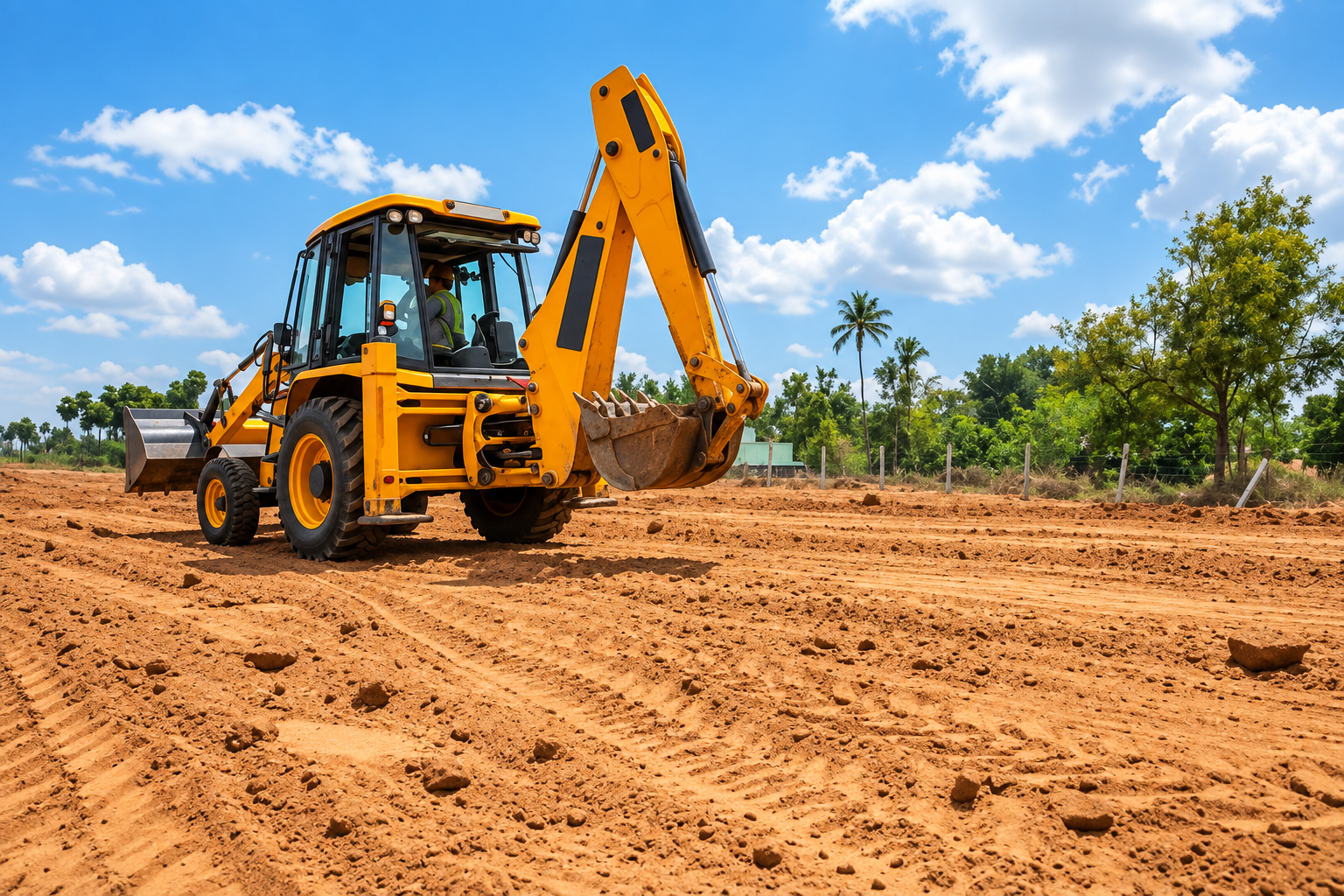
Our machinery resources include Poclain excavators, Tata Hyva tippers, graders, vibratory rollers, water tankers and tractor loaders, together with supporting vehicles and equipment.
Each machine has a particular role.
Excavators support digging and loading. Tippers move material. Graders help develop the required levels and formation. Vibratory rollers support compaction, while water tankers and other equipment assist ongoing site operations.
But productivity cannot be measured simply by how many machines are present.
The important question is whether those machines are being used effectively as one coordinated operation.
The People Who Keep the Cycle Moving
Heavy equipment may do the physical work, but people make the decisions that keep an earthwork operation moving.
Our workforce includes project managers, site engineers, supervisors, equipment operators, drivers, helpers and supporting personnel.
An experienced operator understands the behaviour of the machine and the conditions under which it is working. A supervisor needs to know which section requires attention next. Drivers have to maintain material movement between locations, while engineers and project managers coordinate the broader site requirements.
Earthwork works best when everyone understands how their activity affects the next person in the cycle.
Maharashtra Doesn't Offer the Same Ground Everywhere
One of the realities of working across Maharashtra is the variety of construction environments.
The conditions encountered around Navi Mumbai can be different from those found in Raigad, Ratnagiri or Kolhapur.
Terrain changes. Access changes. Transportation distances change. The nature and scale of the work change.
Our experience across different parts of Maharashtra has reinforced the importance of adapting site operations to actual conditions rather than approaching every project in exactly the same way.
Drawings tell us what has to be achieved.
The ground tells us what we have to work with.
Why Experience Matters in Earthwork and Excavation?
Large-scale earthwork can involve substantial quantities of material and continuous machinery operations.
A small inefficiency repeated hundreds of times can quickly become a larger operational issue.
Experience helps teams understand where those problems can develop.
It helps with decisions about equipment deployment, excavation sequences, material movement and coordination between different working areas.
Our civil contracting experience, going back to 1978, has been built through years of dealing with these practical situations on actual project sites.
That experience remains one of our most valuable resources.
Choosing an Earthwork and Excavation Contractor in Maharashtra
When selecting an earthwork and excavation contractor in Maharashtra, machinery is important, but it should not be the only consideration.
Look at the contractor's experience with infrastructure projects. Understand whether the team has handled excavation, embankment, material transportation and formation-related activities. Consider the available manpower and whether the contractor understands the coordination required for large-scale operations.
At Godavari Constructions, our project experience across highways, expressways, railway formation, airport-related material transportation, irrigation and other civil works has helped us develop practical earthwork capabilities over decades.
For projects requiring bulk excavation, large-scale earthwork, embankment development, grading, sub-grade preparation, material loading and transportation or other supporting civil works, we bring together experienced people, heavy construction machinery and knowledge gained from years on the ground.
Because before infrastructure can rise, connect cities or carry traffic, the ground has to be ready.
And that is where our work begins.
Service
|
10 Oct 2026